
How Cheaters Ruined Multiplayer Gaming (It's Not Just the Money) — and Why Live Service Became Essential for Anti-Cheat
- Cheating is an existential threat to player retention, with 77% of gamers likely to abandon a multiplayer game if they encounter unfair advantages.
- The financial impact of cheating is massive, costing the gaming industry an estimated $29 billion in 2019 alone.
- The commercialized cheat market has evolved into an $8.5 billion underground industry, making client-side security completely obsolete.
- A server-authoritative architecture is the single most critical defense, ensuring the server validates all inputs and game states.
- Unity developers must adopt robust server-authoritative networking frameworks like Fish-Net to build secure, competitive multiplayer environments.
The Real Cost of Cheating: Why Player Trust is Your Most Fragile Asset
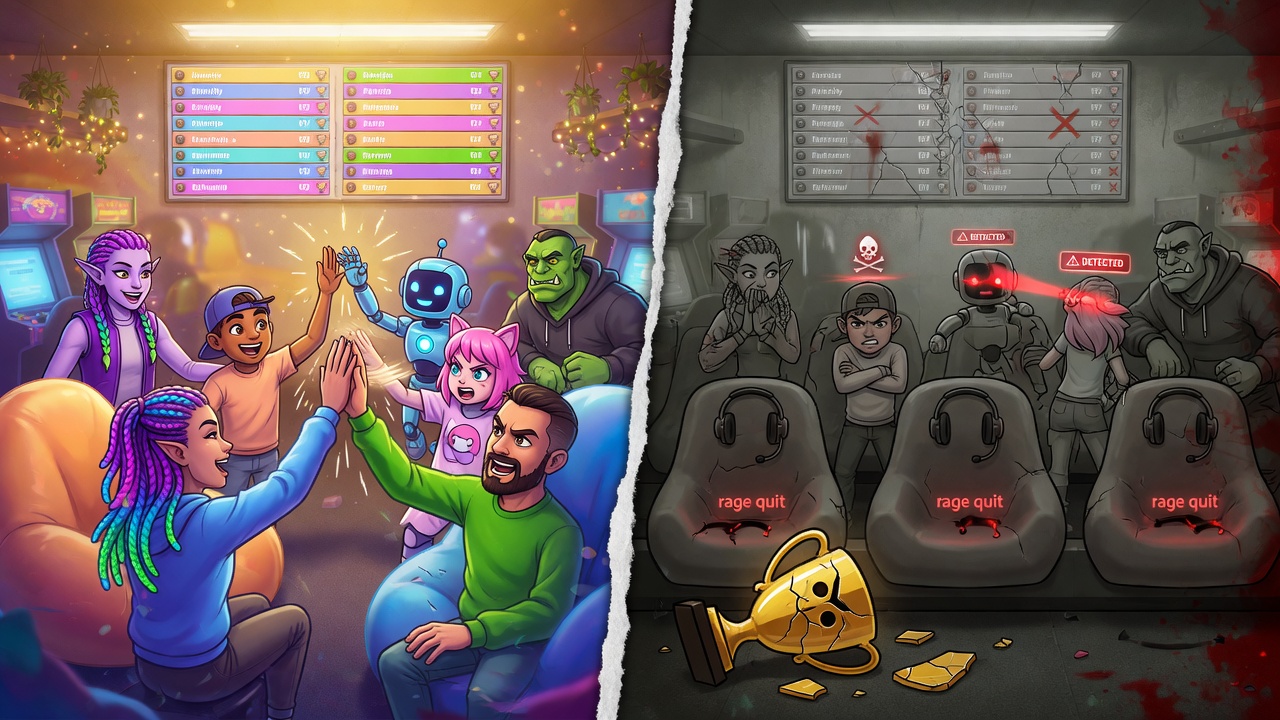
Building on a server-authoritative foundation is not just a technical preference; it is a direct response to the psychological reality of modern online play. When players boot up a multiplayer game, they expect a level playing field. Once that expectation is shattered, the entire ecosystem collapses. Cheating does not just annoy your community—it actively dismantles your player base.
This mass exodus has a devastating, direct impact on a studio's bottom line. Player retention and monetization are inextricably linked; when trust evaporates, spending halts. Data shows that 48% of online gamers specifically state they would purchase less in-game content as a direct result of unfair play.
The Takeaway for Unity Developers
For teams building Unity multiplayer titles, the lesson is clear: if a session no longer feels fair, both player retention and monetization die. Security cannot be treated as a post-launch polish phase. To protect the game's economy and keep players engaged, developers must design their networking architecture to prevent exploitation from day one.
The Ghost Towns of Gaming: How Exploits Kill Communities from the Inside Out
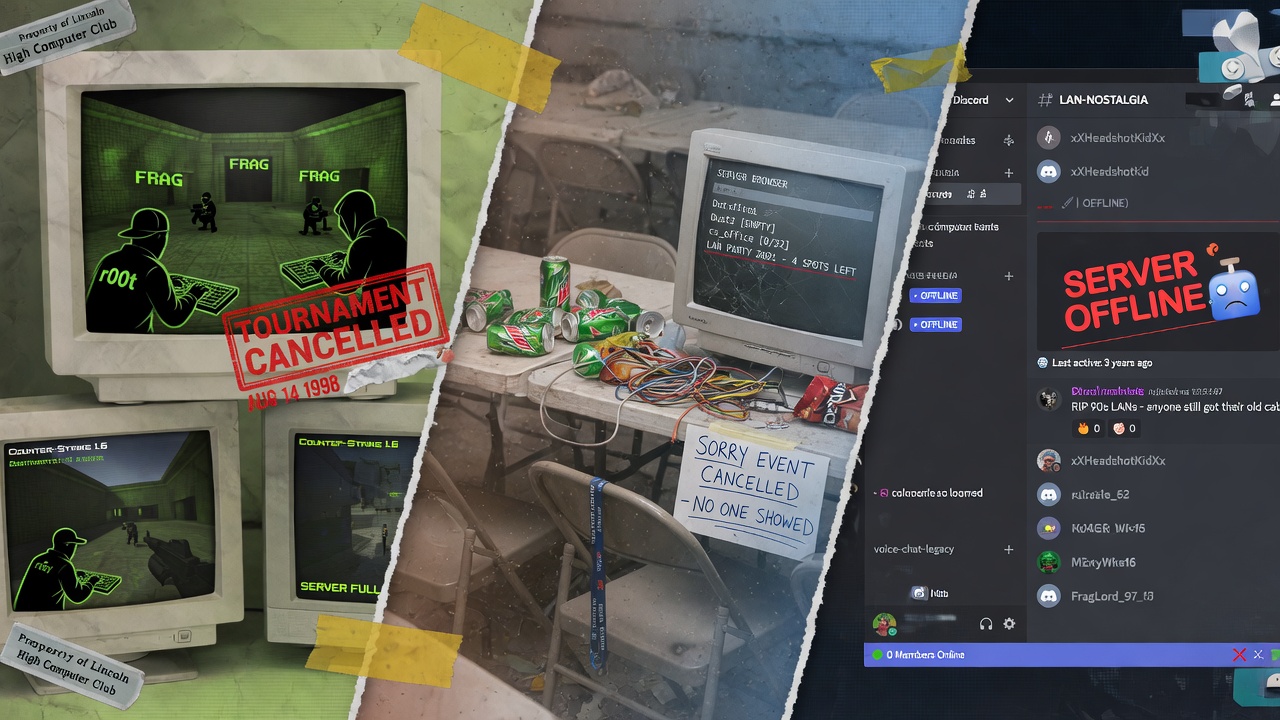
Designing with security in mind from day one is not an academic exercise; history is littered with brilliant titles that were choked to death by their own communities' exploiters. When cheating runs rampant, it does not just dent a studio's balance sheet—it fundamentally alters player behavior and permanently tarnishes a studio's brand.
Consider the original release of Blizzard's Diablo. While its single-player experience was universally praised, its peer-to-peer multiplayer quickly acquired a notorious reputation for being a horrible experience due to rampant hacking, duping, and client-side memory manipulation. The cheating became so pervasive that many players flatly refused to play it online, choosing instead to play exclusively over LAN with trusted friends or abandon the multiplayer component entirely.
Similarly, the original Age of Empires suffered devastating consequences when widespread online cheating took hold. The developer faced cancelled tournaments due to a complete lack of competitive credibility, falling online player counts, and direct, lasting damage to the company's reputation.
For modern Unity multiplayer developers, these historic failures carry a vital lesson: once a community decides a game's competitive integrity is broken, reactive client patches and retrospective ban waves are rarely enough to win them back. Trust is incredibly difficult to rebuild once lost, which is why relying on client-side validation is a structural gamble no modern studio can afford to make.
The Golden Rule of Multiplayer Security: Never Trust the Client
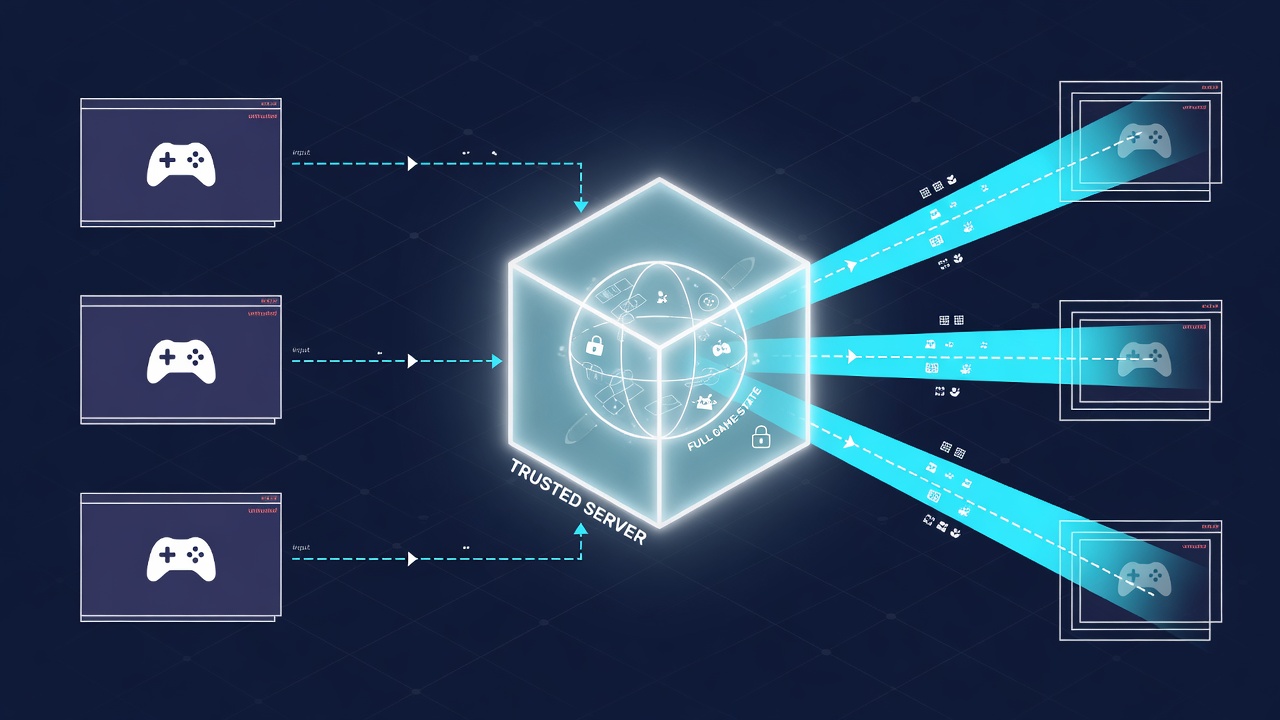
The hard truth of multiplayer development is that any client-side logic, memory, or packet can be reverse-engineered, modified, or proxied by bad actors. If a game client is responsible for determining its own health, position, or inventory, it is only a matter of time before someone tampers with those values to enable god-mode, instant teleportation, or infinite ammo.
To prevent these trivial exploits, developers must embrace a server-authoritative architecture. Under this model, the client only sends intent or inputs, such as movement keys or fire requests, while the server remains the sole arbiter that decides what really happens, manages the game state, and updates everyone else. The single most critical architectural principle for securing a multiplayer game is the use of an authoritative server model.
Eliminating Client-Owned State
By stripping the client of its decision-making power, you eliminate the vectors that make game-breaking hacks possible. In a server-authoritative system, the server validates every action against physical constraints before replicating the state back to the players. This design also enables crucial security techniques like interest management, which prevents wallhacks by refusing to send enemy position data to a client until those enemies are actually visible. While client-authoritative setups might offer a simpler initial development loop, they leave the door wide open to exploitation. Securing your game requires drawing a hard line: the server is the only source of truth.
The Arms Race: Why Live-Service is Your Only Real Defense

Drawing that hard line between client and server is only the first step. Because cheat developers operate as highly sophisticated, agile enterprises, security cannot be a static, "ship-and-forget" feature. It requires a continuous live-service loop to survive.
The Economic Warfare of Modern Exploits
The scale of the threat is staggering. Beyond the multi-billion-dollar underground cheat economy and the massive industry losses it drives, cheaters inflict direct infrastructure costs. Even if bad actors make up a small fraction of your player base—say, just 4%—their hyper-engagement means they can account for up to 40% of gameplay time and cloud hosting costs. Securing your environment directly protects your bottom line.
Why Static Architectures Fail
Legacy multiplayer models simply cannot keep up with this evolving threat landscape:
- Local Area Networks (LAN): Secure but physically restricted, making them useless for global matchmaking.
- Pure Peer-to-Peer (P2P): Highly vulnerable, as one player is designated the host and gains complete control over the game state.
- Static Offline Builds: Unable to deploy real-time behavioral updates, hardware attestation, or patch vulnerabilities before they are widely exploited.
This is why even modern "single-player" titles frequently mandate an always-online connection. By routing progression and economy validation through a live-service backend, developers protect monetization loops and achievements from local memory manipulation. For competitive multiplayer, a continuous live-ops pipeline—supporting rapid ban waves, kernel-level anti-cheat updates, and server-side behavioral monitoring—is the only way to keep the playing field level.
Architecting the Shield: Building Cheat-Resistant Unity Multiplayer with Fish-Net
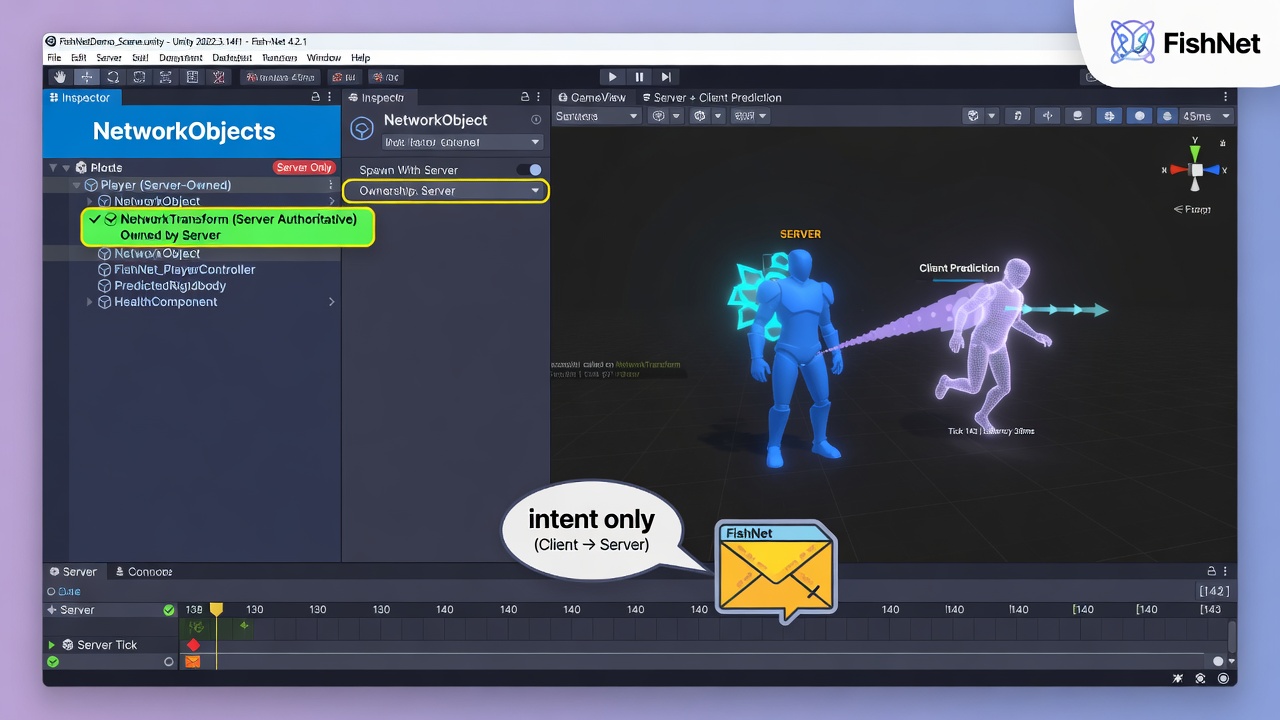
Translating these security principles into production requires choosing the right networking framework. In the Unity ecosystem, your choice of architecture dictates your vulnerability. Traditional client-authoritative solutions like PUN (Photon Unity Networking) make cheating incredibly easy because they trust the client to broadcast its own state, such as position and health, directly to other players. To build a secure game, developers must adopt frameworks built around a server-authoritative design, such as Fish-Net (Fish-Networking), Unity's official Netcode for GameObjects, or Mirror.
A common hurdle with server authority is input latency—players expect instant feedback when they press a key. This is solved through client-side prediction combined with server reconciliation. Under this model, the client predicts and renders its own movement locally to ensure a responsive, lag-free feel, while the server remains the absolute final authority. When the server validates the inputs, it calculates the true state and sends it back; if a discrepancy is detected (such as a speed hack or teleportation), the server reconciles and overwrites the client's predicted position.
When implementing this in Fish-Net, you should adhere to a strict set of rules to keep your simulation secure. First, never let the client declare its state; force it to send raw inputs or intent (like 'move forward' or 'use ability'), which the server simulates and validates. Second, leverage Fish-Net's built-in interest management system to restrict what data is sent to each client. If an enemy player is hidden behind a wall across the map, their positional data should not be replicated to the client's memory at all, neutralizing wallhacks and radar cheats.
The Indie & Browser Multiplayer Security Checklist
Before you ship your next multiplayer project, ensure your architecture passes this fundamental security checklist to prevent critical state exploits:
- Zero Client State Ownership: Ensure critical states (health, inventory, position, damage) are modified exclusively on the server.
- Input Rate-Limiting: Validate the frequency of incoming RPCs to prevent spamming actions or rapid-fire exploits.
- Server-Side Collision: Run a lightweight physics representation on the server to validate that players are not passing through solid geometry.
- Proactive Network Interest: Filter out-of-sight entity data so memory-scanning tools have no data to scrape.
Key Takeaways
Upgrade your Unity multiplayer project to Fish-Net today to secure your game state, protect your community, and build a cheat-resistant foundation.