Fat Games vs Traditional Platformers
When you picture a classic platformer, you probably imagine a pixel-perfect hero who can jump, double-jump, and change directions instantly in mid-air. But there is a growing, fascinating subgenre of browser and indie games that flips this nimble blueprint completely on its head by introducing heavy character mechanics. Instead of effortless agility, these games force players to wrestle with mass, inertia, and gravity.
This shift in physics fundamentally alters how we play. When weight is the primary mechanic, a simple gap is no longer just a jump; it becomes a calculation of velocity and friction. Game designers have long experimented with these feelings—often colorfully described in design circles as "The Quest for Good Platformer Mechanics: Fat Men on Ice Skates"—to find the sweet spot where heavy movement feels satisfying rather than frustrating.
Beyond the technical side of physics programming, these mechanics also open up meaningful conversations about representation and player experience. In the study "Portrayals and Pitfalls of Fatness in Games", researchers ask, "How does being fat sometimes cross over with things like gender? ... what are the things designers can do to make players of all body types feel good playing their work?" By building thoughtful, weight-based gameplay, creators can move past cheap jokes and craft deeply engaging experiences that celebrate diverse physical forms. Let us dive deep into how these heavy physics systems compare to traditional platforming standards and see how they are built to keep players hooked.
- Traditional platformers rely on instant acceleration and speed-based precision.
- Fat platformers pivot to physics-based momentum, weight, and friction, turning movement into a tactical puzzle.
- Modern browser platforms utilize advanced HTML5 physics engines to deliver these heavy-character mechanics seamlessly without downloads.
- Thoughtful design of heavier characters avoids stereotypes and introduces fresh, inclusive gameplay dynamics.
The Anatomy of Speed: How Traditional Platformers Rule the Grid
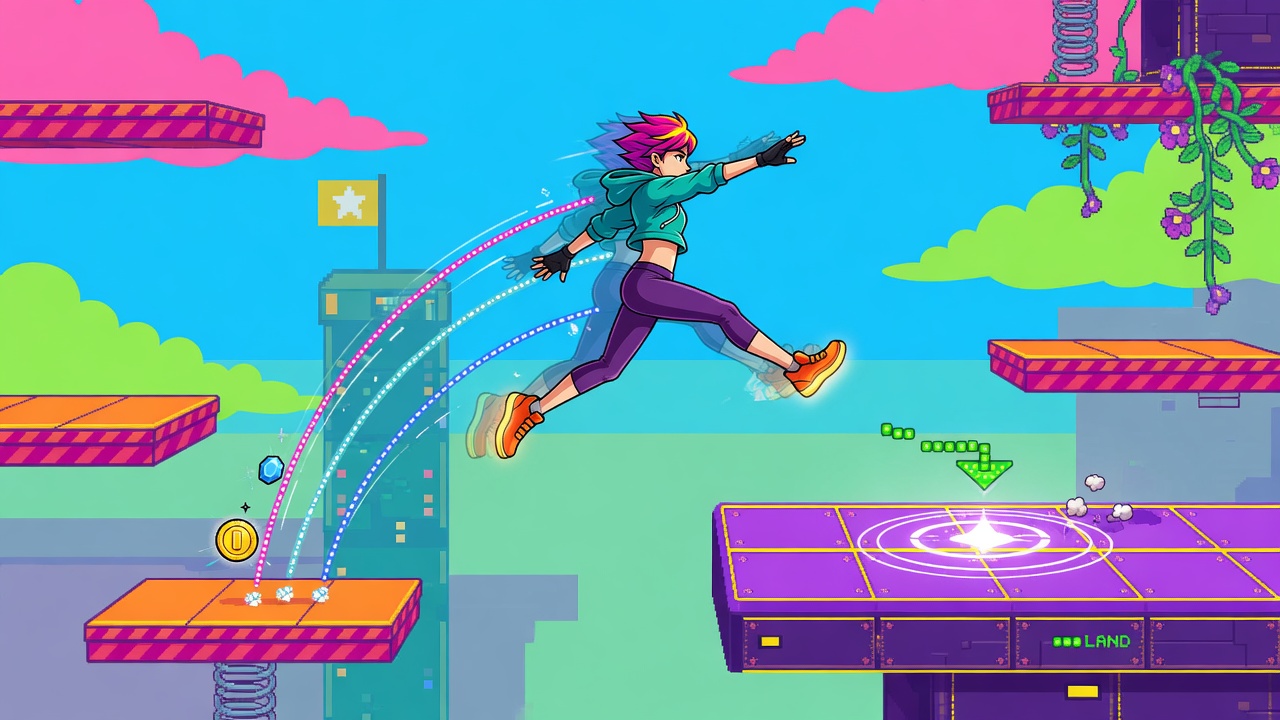
To understand the revolutionary shift that heavy, momentum-driven design brings to the table, we first have to look at the rules of the traditional platformer. Classic side-scrollers are built on a foundation of speed and absolute precision. They demand quick reactions and pixel-perfect jumps, where a single frame of hesitation means falling into a pit of spikes.
In these games, movement is highly responsive. While many traditional titles prioritize momentum built from running starts, the player typically retains an incredible amount of aerial control. You can change direction mid-air almost instantly, defying real-world physics to land on a platform the size of a single tile. This tight, predictable control scheme rewards mastery of tight level layouts, turning each stage into a muscle-memory obstacle course where speedrunners shave off milliseconds.
However, platformer design doesn't always have to be about lightning-fast reflexes. Developers have long realized that exploring weight and momentum can create entirely different flavors of fun, distinct from pure speed mechanics—a concept famously explored in design discussions like The Quest for Good Platformer Mechanics: Fat Men on Ice Skates. Let's look at how slowing things down and adding some serious mass completely flips these traditional design rules on their head.
The Physics of Heft: What Makes 'Fat Games' Distinct
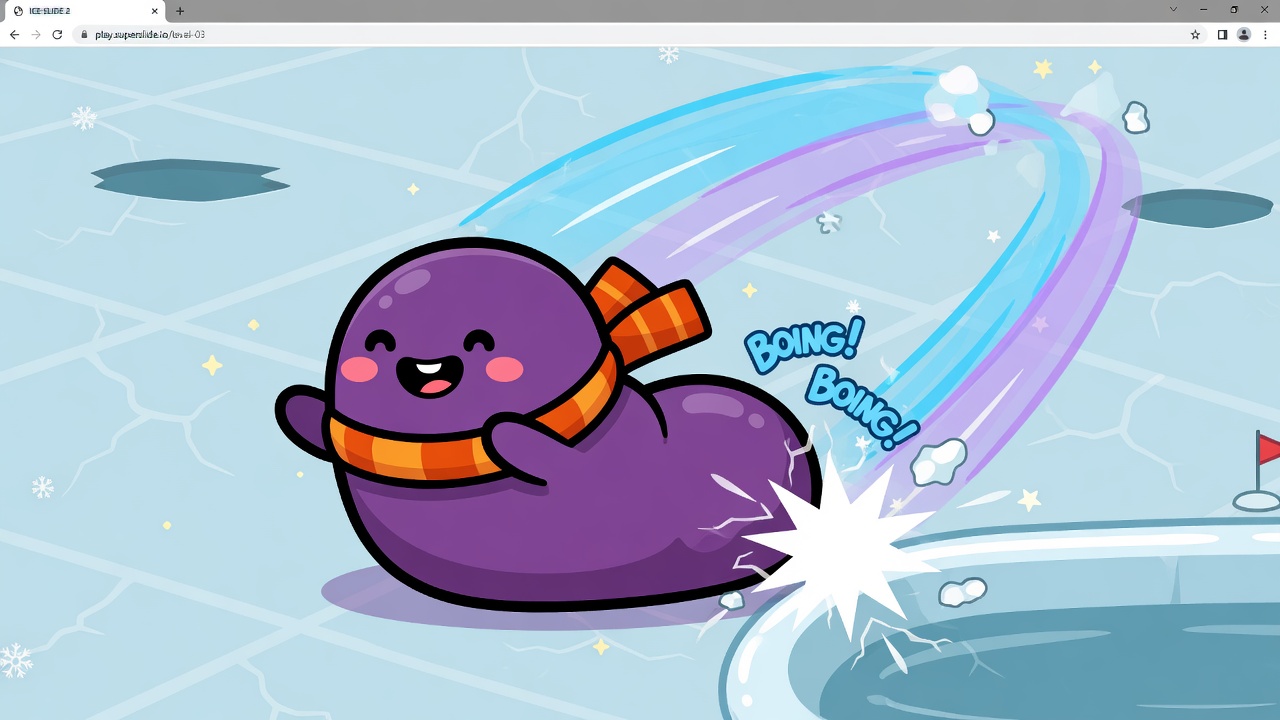
When you inject significant mass into a character, the fundamental feel of navigation changes instantly. Instead of instant acceleration and pixel-perfect stops, heavy characters introduce natural momentum and sliding. Every movement requires anticipation; the player is no longer just aiming for a platform, but calculating friction and gravity as the gameplay focus shifts from raw speed to managing inertia.
This design philosophy has found a highly successful niche in modern web-based gaming. By leveraging HTML5 physics engines, developers can deliver these complex, heavy-character physics instantly, allowing players to jump straight into the action without installs. The immediate accessibility of the browser, combined with the inherently comedic and tactile nature of these weightier mechanics, transforms the traditional platformer struggle into an engaging, physics-based puzzle.
To truly appreciate this shift, we need to look closer at the specific mechanical differences that define how these characters interact with the world around them.
Inertia Rules: How Heavy Physics Redefine the Jump
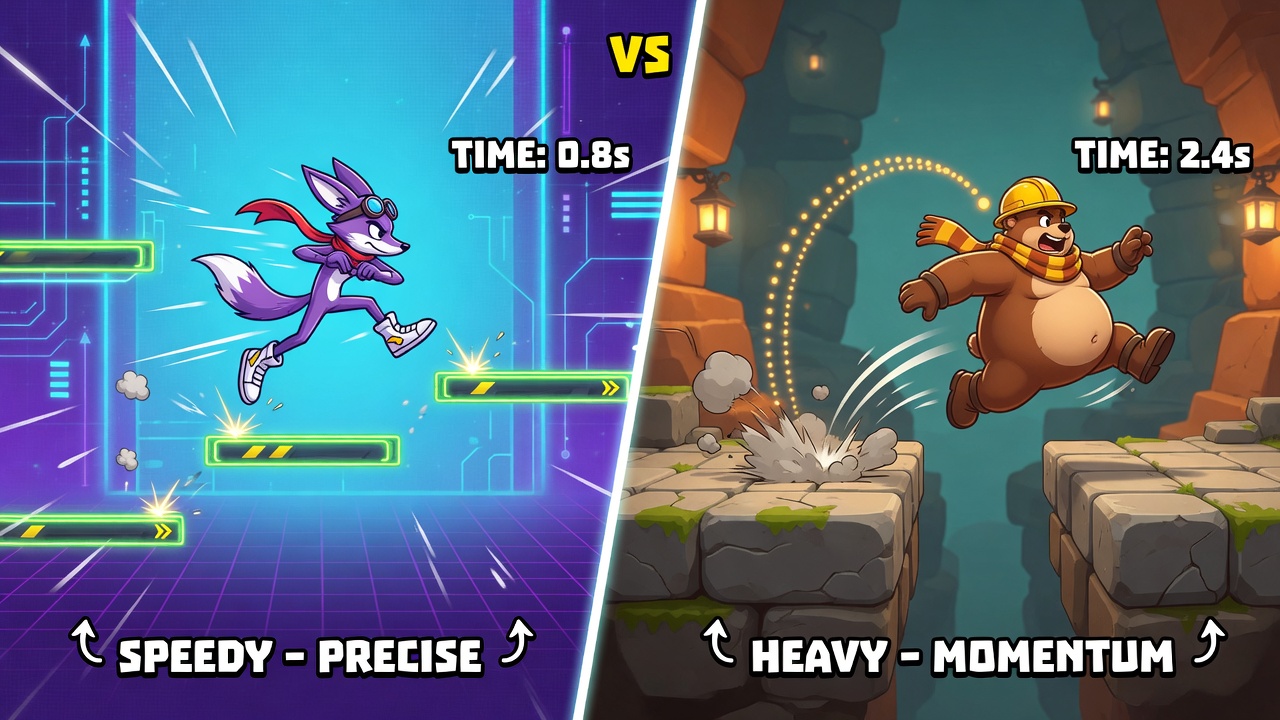
In a traditional platformer, the relationship between input and output is nearly instantaneous. If you press left, your character snaps left; if you release the run button, they stop on a dime. These classic games favor rapid directional changes, giving players absolute control to navigate razor-thin hazard margins. But when you introduce a heavy character, that immediate responsiveness vanishes, replaced by the stubborn rules of real-world physics.
Instead of instant deceleration, players must constantly calculate stopping distance. Every run-up requires an exit strategy; a sudden cliff edge is no longer a simple jump-or-stop decision, but a test of how much sliding momentum has been accumulated.
This weight mechanic fundamentally transforms standard platforming challenges into environmental physics puzzles. A simple gap is no longer just about timing a button press; it becomes a calculation of mass, gravity, and velocity. Can you build enough speed to clear the chasm, and more importantly, do you have enough runway on the other side to slide to a safe halt? But creating these heavy mechanics isn't just about tweaking gravity sliders in an engine; it requires a deliberate approach to character and level design.
Designing Heavy Characters: Balancing Physics, Presence, and Playability

Designing these characters goes far beyond adjusting mass values in a physics engine; it is about creating a deliberate, respectful, and engaging gameplay experience. When developers design larger characters, they have an opportunity to use weight to create humor and mechanical challenges without falling into cheap mockery or lazy stereotypes. Designers must look closely at how to make players of all body types feel good playing their work, using expressive animation and empowering physics to offer genuine, inclusive representation.
To balance this unique style of difficulty and keep the gameplay engaging rather than frustrating, developers must master momentum management through a few key design pillars:
- Visual Feedback: Exaggerated squash-and-stretch animations help players physically feel the impact of a landing, signaling when it is safe to run again.
- Predictable Inertia: Providing subtle air-control options prevents heavy mechanics from feeling unresponsive or punishing.
- Rewarding Momentum: Crafting level layouts that reward players for maintaining their slide makes mastering the heavy physics incredibly satisfying.
Ultimately, shifting the focus from pixel-perfect twitch reflexes to the satisfying heft of a momentum-driven character does more than just change how a game plays. It expands who feels represented on screen, proving that some of the best platforming adventures are won by those who know exactly how to throw their weight around.
Key Takeaways
Explore our suite of Unity URP optimization tools at bigfatgames.com to help you build smooth, high-performance physics systems for your next project.